TEISMUI PERDUOTA BYLA DĖL SKIRTINGOSE VALSTYBĖSE ORGANIZUOTŲ IR PLANUOTŲ ĮVYKDYTI TERORO AKTŲ (with text in English)
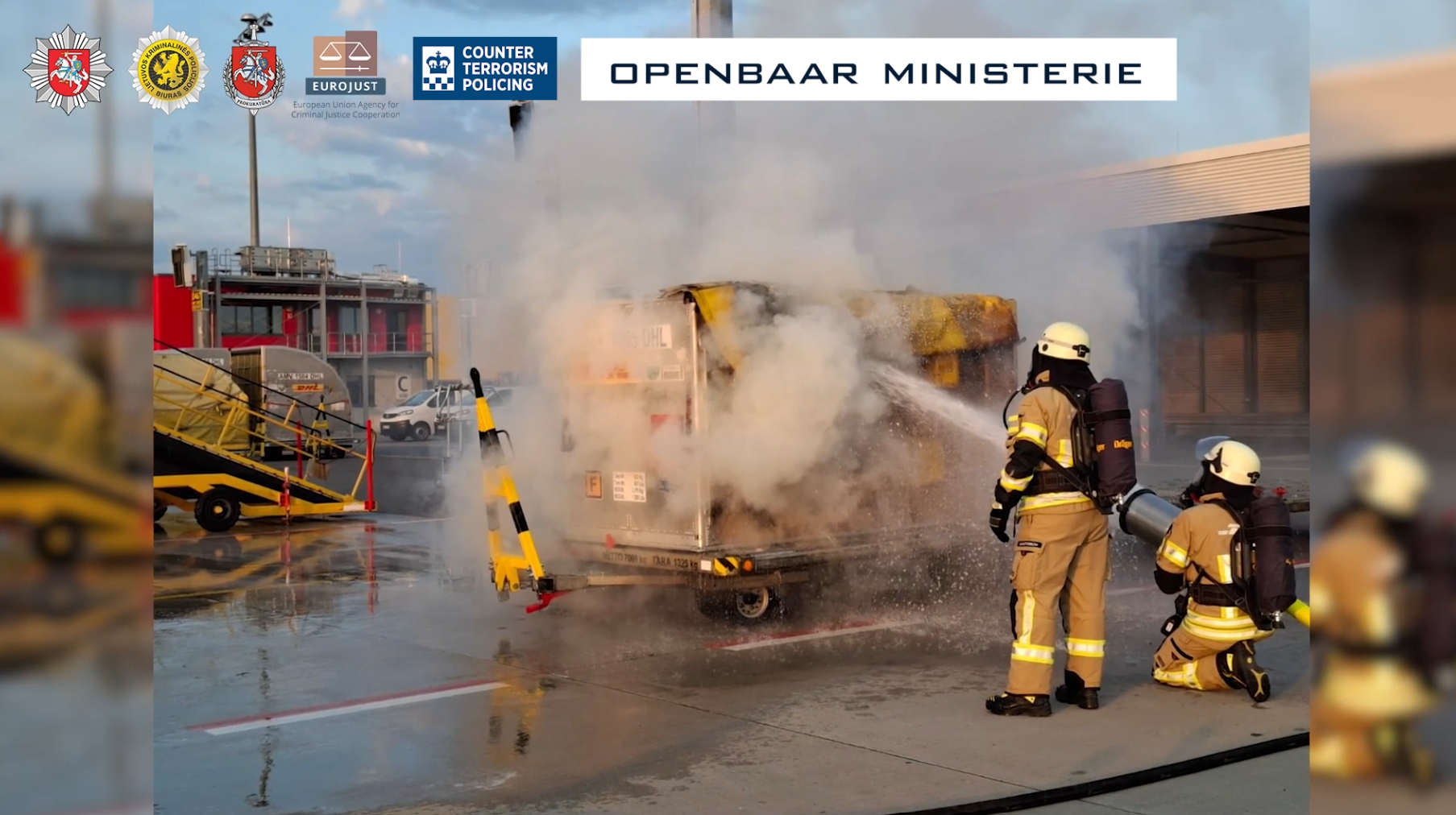
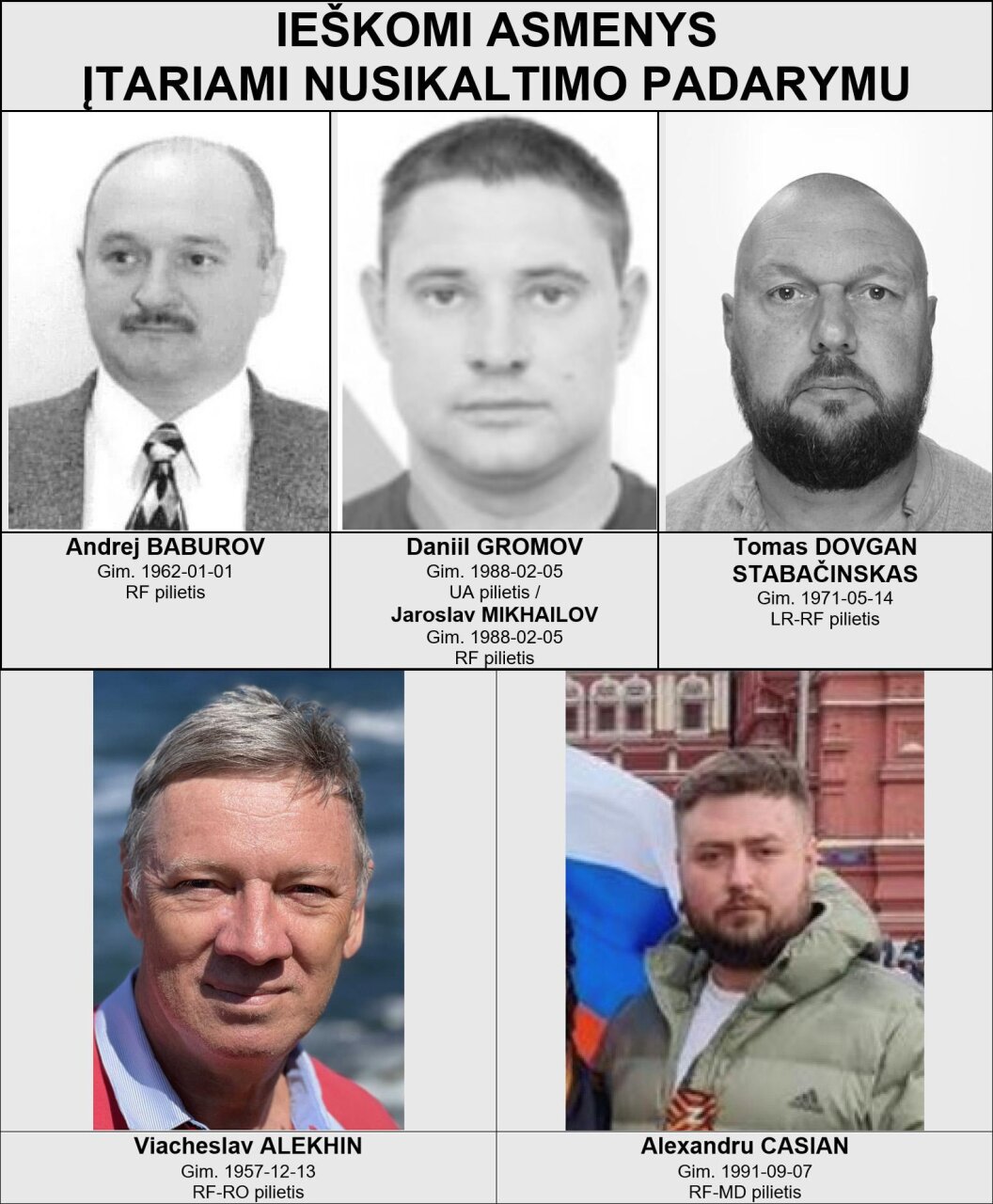
Generalinė prokuratūra perdavė teismui baudžiamąją bylą, kurioje 5 asmenims pateikti kaltinamai organizavus ir planavus įvykdyti teroro aktus skirtingose valstybėse veikiant organizuotoje teroristinėje grupėje.
Ši baudžiamoji byla atskirta nuo didelės apimties sudėtingo Lietuvos kriminalinės policijos biuro atliekamo tyrimo, kuriame šiuo metu nustatyta ne mažiau kaip 16 įvairių valstybių piliečių, organizavusių, planavusių ir prisidėjusių vykdant teroristinius nusikaltimus skirtingose šalyse. Tyrimo metu aktyviai bendradarbiauta ir su VSD pareigūnais.
Teismui perduotos baudžiamosios bylos medžiagą sudaro 49 tomai.
Ikiteisminio tyrimo metu nustatyta, kad 2024 m. liepos 19 d. Lietuvos Respublikos pilietis, veikdamas kartu su bendrininkais, pasinaudojo DHL bei DPD bendrovių tarptautinių siuntų pristatymo bei transportavimo paslaugomis ir iš Vilniaus išsiuntė 4 siuntas su savadarbiais sprogstamaisiais-padegamaisiais užtaisais.
Dvi iš šių siuntų buvo adresuotos ir DHL krovininiais lėktuvais išsiųstos į Jungtinę Karalystę, kitos dvi – adresuotos ir išsiųstos į Lenkiją DPD krovininiais vilkikais.
Pirmoji siunta, veikiama iš anksto užprogramuoto elektroninio laikmačio, detonavo ir užsidegė Leipcigo (Vokietija) oro uoste ankstų liepos 20 d. rytą, prieš pat krovinio pakrovimą į jungiamojo skrydžio (Vilnius-Leipcigas-Jungtinė Karalystė) DHL krovininį lėktuvą. Antroji siunta užsidegė liepos 21 d. naktį DPD krovininiame vilkike, važiavusiame per Lenkiją. Jungtinę Karalystę pasiekusi siunta Birmingeme esančiame DHL sandėlyje užsidegė dar maždaug po paros, taip pat nakties metu. Ketvirtas siuntinys, gabentas DPD krovininiu sausumos transportu, neužsidegė dėl gedimo įtaise ir buvo perimtas pareigūnų. Jį ištyrus buvo nustatytas šių įrenginių sprogstamųjų-padegamųjų įrenginių mechanizmas ir įvertintas keltas pavojingumas.
Atsižvelgiant į tai, kad teroro aktai buvo vykdyti skirtingose valstybėse ir itin pavojingu būdu, galinčiu sukelti labai sunkias ir negrįžtamas pasekmes, Eurojuste buvo įkurta ir koordinuojama jungtinė tyrimo grupė, kurią sudarė Lietuva, Lenkija, Vokietija, Nyderlandai ir Jungtinės Karalystė. Tyrimo metu įvairią pagalbą tyrėjams teikė Estijos, Latvijos, Jungtinių Amerikos Valstijų, Kanados teisėsaugos ir žvalgybos institucijų pareigūnai bei Europolas.
Aktyviai vykęs tarptautinis bendradarbiavimas, kurio metu buvo nuolat derinami nacionalinių tyrimų veiksmai, keičiamasi duomenimis ir tikrinamos atskirų atvejų sąsajos, leido nustatyti, kad du bandomieji siuntiniai buvo išsiųsti ir į Jungtines Amerikos Valstijas bei Kanadą ir padėjo tyrėjams aptikti dar du tokius pat siuntinius į šias šalis Amsterdame.
Tarptautinio tyrimo metu nustatyta, kad nurodytus nusikaltimus organizavo ir jų įgyvendinimą koordinavo asmenys, siejami ir turintys ryšių su Rusijos Federacijos karinėmis-žvalgybos tarnybomis.
Nustatyta, kad minėti asmenys veikė labai suderintai, laikydamiesi itin griežtos konspiracijos, išskaidydami atskiras užduotis, tokias kaip siuntų ir padegamųjų medžiagų gabenimas, jų perdavimas kitiems, slėpimas specialiai parengtose slėptuvėse ar kitose vietose, padegamųjų užtaisų aktyvavimas bei kitas, ir pavesdami jas atlikti skirtingiems, dažniausiai – tarpusavyje nesusijusiems, vykdytojams ir jų grandinėms.
Tyrimo duomenimis, organizuojant ir rengiantis įvykdyti teroro aktus, atskiroms užduotims buvo pasitelkiami Rusijos, Latvijos, Estijos, Lietuvos, Ukrainos piliečiai, dažniausiai – socialiai pažeidžiami asmenys, kurie tuo tikslu buvo ieškomi pasinaudojant pažintimis, verbuojant ir palaikant ryšį per „Telegram“ programą bei siūlant atlygį ir atsiskaitant kriptovaliuta.
Tyrėjai nustatė, kad didelio padegamojo poveikio savadarbiai sprogstamieji-padegamieji užtaisai buvo valdomi elektroniniais laikmačiais, paslėptais masažinėse (vibro) pagalvėlėse, o papildomi degiųjų medžiagų mišiniai, skirti sustiprinti padegamąjį poveikį – higienos ir kosmetikos priemonių tūtelėse. Sprogstamajam-padegamajam poveikiui naudota pramoniniams bei kariniams tikslams naudojama medžiaga – termitas, pasižymintis itin aukšta degimo temperatūra.
Tyrimo metu Lietuvoje, Lenkijoje, Latvijoje, Estijoje buvo atlikta daugiau nei 30 kratų.
Atliekant kompleksinius tyrimo veiksmus iš neteisėtos apyvartos taip pat buvo išimtos sprogstamosios medžiagos, kurios buvo parengtos panaudoti, o taip pat ir jų detonatoriai. Dalis rastų sprogstamųjų užtaisų buvo pagaminti taip, kad sprogimo efektas būtų stipresnis tam tikra kryptimi. Sprogstamųjų medžiagų gamybai naudotas heksogenas. Iš neteisėtos apyvartos išimtų sprogstamųjų užtaisų bendra sprogstamoji galia pagal trotilo ekvivalentą siekia daugiau kaip 6 kg. Remiantis turimais duomenimis, kaip įtariama, iš neteisėtos apyvartos išimti sprogstamieji užtaisai galėjo būti panaudoti kitų teroro aktų planavimui ir įgyvendinimui.
Pažymėtina, kad keli šių nusikaltimų įvykdymo koordinatoriai taip pat yra siejami su bandymu įvykdyti teroro aktą 2024 m. gegužės 9 d. Vilniuje, kuomet buvo padegtas prekybos centras „IKEA“ 1.
Teismui vasario 27 d. perduotoje baudžiamojoje byloje kaltinimai dėl nurodytų nusikalstamų veikų organizavimo ir įvykdymo pareikšti 5 asmenims. Kitų įtariamųjų atžvilgiu ikiteisminis tyrimas tęsiamas toliau.
Už nurodytų nusikaltimų padarymą Lietuvos Respublikos Baudžiamojo kodekso 2491 str. „Teroristinės arba organizuotos teroristinės grupės kūrimas ir veikla“ 3 d. ir 4 d. numatyta laisvės atėmimo bausmė nuo 5 metų iki gyvos galvos, o 250 str. „Teroro aktas“ 1 d. ir 2 d. – laisvės atėmimo bausmė iki 10 metų.
Iš viso Lietuvos, Lenkijos, Nyderlandų, Vokietijos ir Jungtinės Karalystės teisėsaugos institucijos, veikdamos Eurojusto koordinuotoje jungtinėje tyrimo grupėje nustatė 22 šiuos nusikaltimus planavusius ir vykdžiusius asmenis, įskaitant ir 5 Lenkijoje teismui jau perduotus asmenis.
Vadovaujantis Lietuvos Respublikos Konstitucijos 31 straipsniu asmuo laikomas nekaltu, kol jo kaltumas nėra įrodytas įstatymo nustatyta tvarka ir pripažintas įsiteisėjusiu teismo nuosprendžiu.
Bendras Generalinės prokuratūros ir Lietuvos kriminalinės policijos biuro pranešimas
Eurojusto pranešimas apie JTG veiklą
1 https://policija.lrv.lt/lt/naujienos/teismui-perduodamas-asmuo-kaltinamas-prekybos-centro-padegimu-ir-dar-vieno-teroristinio-akto-planavimu/
CASE ON TERROR ACTS ORGANISED AND PLANNED IN DIFFERENT COUNTRIES REFERRED TO COURT
The Prosecutor General’s Office referred to the court a criminal case wherein five persons were charged with organising and planning terrorist acts in different countries as part of an organised terrorist group.
This criminal case has been separated from the large-scale complex investigation conducted by Lithuanian Criminal Police Bureau which currently identifies at least 16 citizens of different countries who organized, planned and contributed to the commission of terrorist crimes in different countries.
The criminal case file referred to the court consists of 49 volumes.
During the pre-trial investigation, it was established that, on 19 July 2024, a citizen of the Republic of Lithuania, acting together with accomplices, used the international parcel delivery and transportation services of DHL and DPD companies and sent 4 parcels with self-made explosive-ignitable devices from Vilnius.
Two of those consignments were addressed and dispatched by DHL to the United Kingdom by cargo aircraft, whereas the other two were addressed and dispatched to Poland by DPD trucks.
The first shipment, operated by a pre-programmed electronic timer, detonated and ignited at Leipzig (Germany) airport in the early morning of 20 July, just before loading the cargo onto a DHL cargo plane on a connecting flight (Vilnius-Leipzig-United Kingdom). The second shipment caught fire on the night of July 21 in a DPD truck running through Poland. The third shipment which arrived in the UK at the DHL warehouse in Birmingham caught fire about a day later, also at night. The fourth parcel, carried by DPD by land freight, did not light up due to a fault in the device and was intercepted by officers. The inspection thereof identified the explosive-incendiary mechanism of these devices and assessed the underlying hazards.
Given that the acts of terrorism were committed in different countries and in a particularly dangerous manner with potentially very serious and irreversible consequences, a Joint Investigation Team composed of Lithuania, Poland, Germany, the Netherlands and the United Kingdom was set up and coordinated at Eurojust. During the investigation, law enforcement and intelligence officials from Estonia, Latvia, the United States of America, Canada and Europol provided various assistance to the investigators.
Active international cooperation, through regular coordination of national investigations, data exchange and case-by-case linkages, has led to the discovery that two test parcels were also sent to the United States of America and Canada and helped investigators detect two more identical parcels to these countries in Amsterdam.
During the international investigation, it was established that the specified crimes were organized and their implementation coordinated by citizens, associated with and having links with the military-intelligence services of the Russian Federation.
Those persons were found to have acted in a highly coordinated manner, following a particularly strict conspiracy, splitting up individual tasks, such as transporting consignments and incendiary substances, transferring them to other individuals, hiding them in specially prepared shelters or other places, activating incendiary devices and others, and entrusting them to different, mostly unrelated, operators and their chains.
According to the investigation, citizens of Russia, Latvia, Estonia, Lithuania and Ukraine were used for separate tasks in the organisation and preparation of terrorist acts, most often socially vulnerable people, who were sought for this purpose by means of acquaintances, recruitment and communication through Telegram and offering rewards and settlements in cryptocurrencies.
The investigators have found that the self-made explosive-inflammable devices of high incendiary impact were controlled by electronic timers hidden in massage (vibro) cushions, and additional mixtures of combustible substances to enhance the incendiary effect were controlled from the tubes of products of hygiene and cosmetics. Explosive-flammable material used for industrial and military purposes: termite with extremely high combustion temperatures.
During the investigation, more than 30 searches were carried out in Lithuania, Poland, Latvia and Estonia.
Explosives that were ready for use, as well as their detonators, were also removed from illegal circulation as part of a complex investigation. Some of the explosive devices found were made in such a way that the explosion effect would be stronger in a certain direction. Hexogen was used in the production of explosives. Explosive devices removed from illicit circulation had a total explosive power of more than 6 kg in trotyl equivalent. According to the available data, explosive devices removed from illicit circulation may have been used for the planning and implementation of other terrorist acts.
It should be noted that several coordinators for the commission of these crimes are also associated with the attempted terrorist act on 9 May 2024 in Vilnius, when the IKEA shopping centre was set on fire. 2
In the criminal proceedings referred to the court on 27 February, five persons were charged with the organisation and commission of the offences in question. With regard to other suspects, the pre-trial investigation continues.
The commission of these criminal offences is punishable further to Parts 3 and 4 of Article 249-1 of the Criminal Code of the Republic of Lithuania (Establishment and Activities of a Terrorist or Organized Terrorist Group) by a custodial sentence from 5 years to life imprisonment, and further to Parts 1 and 2 of Article 250 of the Criminal Code of the Republic of Lithuania (Terrorist Act) by a custodial sentence for a term of up to 10 years.
In total, law enforcement authorities from Lithuania, Poland, the Netherlands, Germany and the United Kingdom, acting within a joint investigation team coordinated by Eurojust, identified 22 individuals who planned and committed these crimes, including 5 individuals already transferred to court in Poland.
In accordance with then provisions of Article 31 of the Constitution of the Republic of Lithuania, a person shall be presumed innocent until his guilt has been proved in accordance with the procedure laid down by law and recognised by a final court judgment.
Joint statement by the Prosecutor General's Office and the Lithuanian Criminal Police Bureau
Video material prepared by Lithuanian Criminal Police Bureau
2 https://policija.lrv.lt/en/news/court-transferred-person-accused-trade-centre-arson-and-further-one-terrorist-act-planning/
NAUJIENOS

 |
AKTUALU PRANEŠĖJAMS |


Renginių kalendorius
| P | A | T | K | P | Š | S |
| 28
2026-09-28 14:00 2026-09-28 08:30 |
29
2026-09-29 13:00 |
30
2026-09-30 14:00 2026-09-30 13:00 2026-09-30 10:10 |
1
2026-10-01 15:00 2026-10-01 13:00 2026-10-01 10:30 |
2
2026-10-02 15:00 2026-10-02 11:00 2026-10-02 09:00 |
3 | 4 |
| 5 | 6
2026-10-06 11:00 |
7
2026-10-07 09:00 |
8
2026-10-08 11:00 |
9
2026-10-09 16:00 |
10 | 11 |
| 12
2026-10-12 17:00 2026-10-12 08:30 |
13
2026-10-13 14:00 2026-10-13 10:00 |
14
2026-10-14 11:00 |
15
2026-10-15 15:15 2026-10-15 14:00 2026-10-15 09:00 |
16
2026-10-16 10:00 2026-10-16 09:00 |
17 | 18 |
| 19 | 20 | 21 | 22 | 23 | 24 | 25 |
| 26 | 27 | 28 | 29 | 30 | 31 | 1 |

